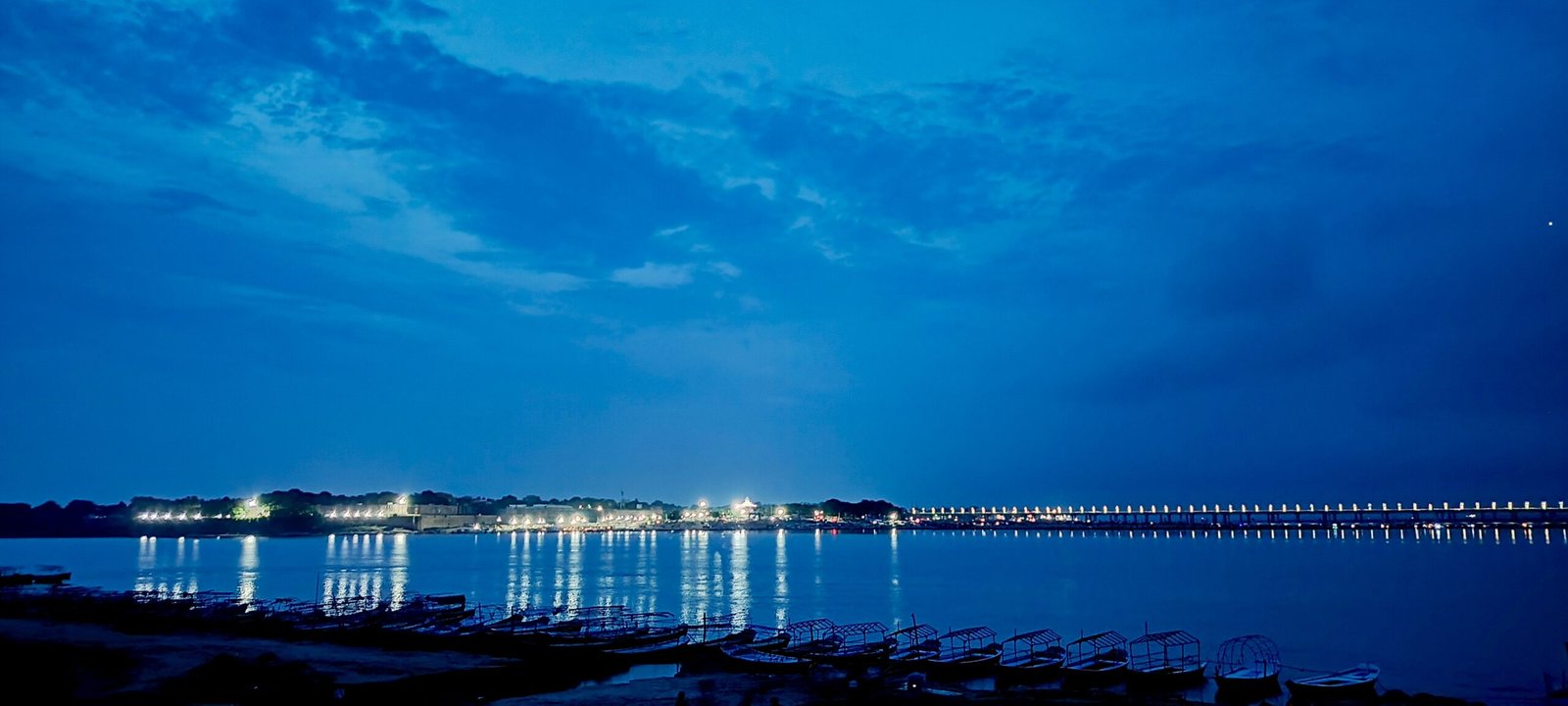
Prayagraj, formerly known as Allahabad, is one of the oldest living cities in India.
Located at the sacred confluence of the Ganga, Yamuna, and the mythical Saraswati rivers,
the city holds immense historical, religious, and cultural significance.
Prayagraj in Ancient Times
In ancient Indian texts, Prayagraj was known as Prayaga, a name that holds deep spiritual and cultural meaning. The word Prayaga comes from Sanskrit and refers to a sacred place where important rituals and yajnas were performed. Because of this, Prayaga was considered one of the most holy locations in ancient India.
The significance of ancient Prayagraj lies in the Triveni Sangam, the confluence of the rivers Ganga, Yamuna, and the mythical Saraswati. In ancient times, this meeting point of rivers was seen as a divine space where heaven and earth connected. The Sangam made Prayaga a major center for pilgrimage long before modern cities existed.
Archaeological and historical studies suggest that earlier humas started settlements around the riverbanks due to fertile land, water and trade routes. Then these Places later turned into a thriving cultural and religious center, This is from where the importance of Prayagraj grew and continues till today
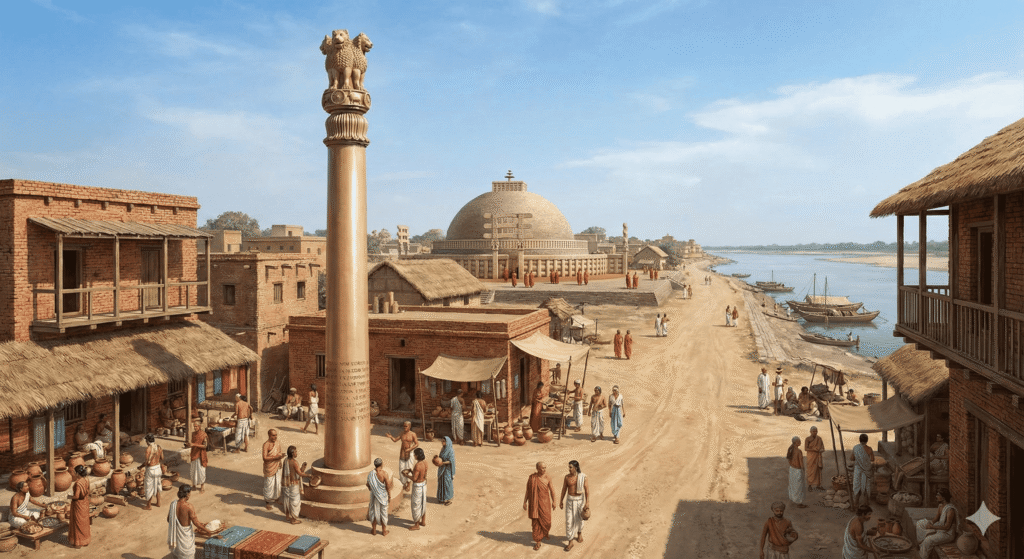
Prayagraj in the Maurya and Gupta Period
During the Maurya period, Because of its proximity to important river routes, Prayagraj had administrative significance that time. In order to keep areas like Prayaga well-connected to the rest of the empire, the Mauryan rulers concentrated on effective governance, trade regulation, and communication networks. Prayagraj was regarded as an administrative hub at the time, despite not being a capital city.
The region’s social and religious life was probably influenced by Ashoka’s Dhamma, religious tolerance, and moral governance policies. Prayaga’s ongoing significance as a holy site implies that it was respected and safeguarded during Mauryan rule.
Prayagraj’s culture flourished during the Gupta era, which is sometimes referred to as India’s Golden Age. Rapid advancements in literature, art, education, and religion reinforced the city’s position as a hub for learning and spirituality. Prayagraj’s standing as a significant pilgrimage site in ancient India was strengthened by the Gupta rulers’ support of Hinduism.
Prayagraj During the Medieval Period
Prayagraj gained major political importance during the Mughal era, especially under Emperor Akbar. Because of its location at the confluence of the Ganga and Yamuna, Akbar transformed the city into an important administrative and military center.
In 1575, Akbar renamed Prayagraj as Allahabad, meaning “City of God.” The Re-naming of the city did not subdue the importance of the city although it still remained significant for both governance and religion. Allahabad became a key province in the Mughal administration and played an important role in controlling northern India.
Allahabad Fort is One of the most important Mughal landmarks built by Akbar near the Sangam. The fort served as a military base and administrative center and remains one of the largest forts built by the Mughal Empire.
Prayagraj in the British Era
Prayagraj became an important center during the British colonial period after the arrival of the East India Company in the late 18th century. Due to its location and existing administrative Centre, the British developed the city as a key political and governance hub in northern India.
For a brief period, Allahabad served as the capital of the United Provinces, which increased its administrative importance. The British built courts, railways, educational institutions, and civil infrastructure, shaping the modern layout of the city.
Prayagraj played a significant role in India’s freedom movement. It became a center for political discussions, protests, and nationalist activities. Many important meetings and movements were organized in the city, contributing to the struggle against British rule.
The city is closely associated with the Nehru family, especially Pandit Jawaharlal Nehru. Anand Bhavan and Swaraj Bhavan in Prayagraj became important centers of the Indian National Congress and freedom movement activities, further strengthening the city’s political legacy
Prayagraj After Independence
Prayagraj continued to develop into a significant center for education and thought after India gained independence in 1947. Academics, civil services, and research in the nation were greatly influenced by establishments such as the University of Allahabad, which is sometimes referred to as the “Oxford of the East.”
In independent India, the city continued to play a significant role in democratic and administrative matters and produced a number of national leaders. Prayagraj has a respected position in India’s political landscape because of its historical ties to the freedom movement.
Additionally, Prayagraj maintained its rich cultural identity by fusing tradition with modern living. Religious celebrations, literary events, and cultural activities all flourished, preserving the city’s ancient legacy while adjusting to modern India.
From Allahabad to Prayagraj
Allahabad’s old name was restored in 2018 when the Uttar Pradesh government formally renamed it Prayagraj. Since Prayagraj is listed in Hindu scriptures as one of India’s holiest pilgrimage sites, the change was made to reflect its profound cultural, religious, and historical significance. Situated at the meeting point of the Ganga, Yamuna, and the fabled Saraswati rivers, the city has long been linked to India’s cultural legacy and the Kumbh Mela. The goal of the renaming was to bring the city’s name closer to its traditional origins while also reviving this historical identity.

The city has continuously changed while maintaining its core of civilization, from its beginnings as Prayaga in ancient Vedic texts to its identity as Allahabad during the Mughal and British eras. Prayagraj has played a pivotal role in Indian history as a sacred site at the Triveni Sangam, an important administrative center under the Mauryas, a thriving city during the Gupta golden age, a vital Mughal stronghold, and a significant hub for colonial governance and India’s freedom movement.
Following independence, the city developed into a political, cultural, and educational hub . In addition to being administrative, the 2018 renaming of Allahabad to Prayagraj represented a return to the city’s spiritual identity and ancient heritage. Prayagraj always represent the symbol of nationalism, religion, and history that continue to influence its significance in India.